
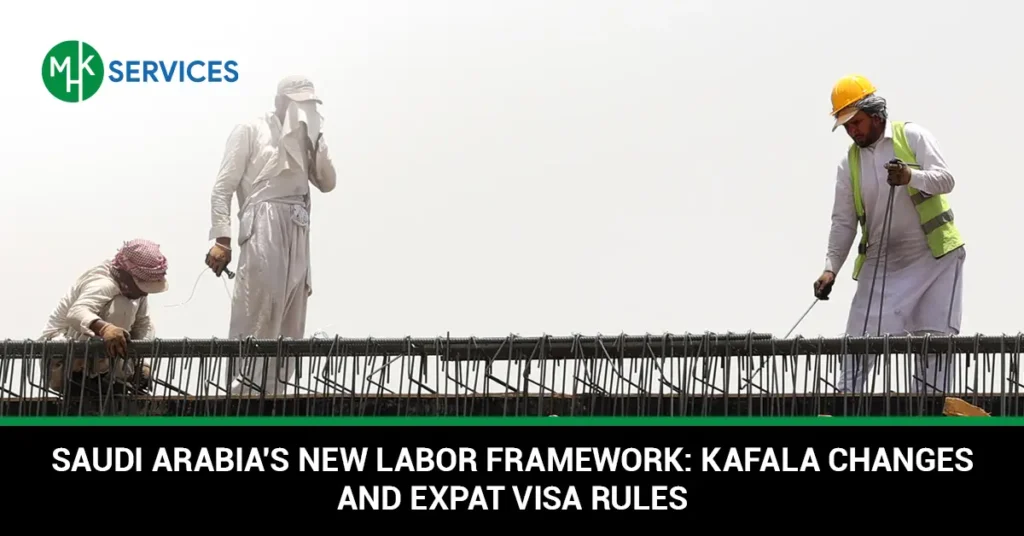
Saudi Arabia has introduced major changes to its labor system, reshaping how expatriate employees and employers work together. These updates mark a significant shift away from the traditional sponsorship model and move toward a more contract-based approach. MHK Services has seen growing interest from businesses and job seekers who want to understand how these reforms affect daily work life.
The Kafala System Saudi Arabia has long defined the relationship between employers and foreign workers, but recent labor mobility rules and visa reforms are changing that structure. This article explains what has changed, how it affects expatriates and employers, and what steps businesses should take to stay compliant with the updated framework.
What Has Changed in Saudi Arabia’s New Labor Framework?
The 2025 labor reforms brought noticeable changes to how employment relationships work in the Kingdom. Instead of relying heavily on employer sponsorship, the system now places more importance on formal employment contracts. This shift gives expatriate workers more clarity about their rights and responsibilities.
The Saudi Labor Reforms also introduced smoother processes for job mobility, allowing eligible workers to move between employers under specific conditions. These updates connect directly to earlier adjustments made to the Kafala System Saudi Arabia, showing a steady move toward a more transparent and organized labor market. At MHK Services, we help both employers and employees understand these ongoing changes and what they mean in practice.
Can Expatriates Change Jobs Without Their Employer’s Permission?
Many expatriates want to know if they can switch jobs freely under the current rules.
In general, eligible workers can transfer to a new employer without needing direct approval from their current employer, as long as certain conditions are met. These conditions usually depend on:
- Having a valid and active employment contract with clearly stated terms that define the job role, duration, and responsibilities agreed upon by both parties
- Completing any required notice period before the transfer takes place, giving the current employer reasonable time to plan for the change
- Submitting the job transfer request through the Qiwa online platform, which verifies eligibility and processes the transfer digitally
- Meeting any specific conditions tied to their profession or contract type, since some roles carry additional requirements before a transfer is approved
- Ensuring there are no unresolved legal or financial issues with the current employer, such as unpaid dues or ongoing disputes
What Are the New Expat Visa and Exit Rules?
Visa and exit procedures have also become more streamlined under the updated framework. Here is what has changed for expatriate workers regarding travel and exit documentation:
- Exit and re-entry visas can now be processed digitally for many eligible workers, reducing the need for repeated paperwork and in-person visits
- Final exit procedures have been simplified through online government portals, allowing workers to complete steps remotely in most cases
- Employers still play a role in certain visa approvals, though with reduced control overall compared to the earlier sponsorship system
- Digital platforms like Qiwa and Absher allow workers to manage visa requests more independently, saving time during the application process
- Certain worker categories and contract types may still require additional employer coordination before a visa request can be finalized
These updates to the Expat Visa Saudi Arabia process aim to reduce delays and give workers more direct access to essential travel documents. At the same time, employers must stay updated on which categories of workers still require their involvement in the Expat Visa Saudi Arabia process to avoid compliance issues.
What Are the New Skill-Based Work Permit Rules for Expatriates?
A major part of the reform involves classifying expatriate workers based on their skill level rather than a single generic permit type. The three main categories are:
- High-Skilled work permits, given to workers with advanced qualifications, specialized experience, or roles in fields requiring higher expertise such as engineering, medicine, or senior management
- Skilled work permits, meant for workers with recognized professional experience and mid-level qualifications in technical or supervisory roles
- Basic work permits, designed for roles that do not require specialized training or advanced certification, such as general labor and support positions
How Classification Is Decided
Workers are classified using factors such as their educational background, years of experience, job title, and salary level. This classification affects benefits such as job mobility options and visa processing speed. These changes connect closely with the broader shift away from the older Kafala System Saudi Arabia structure, since permits are now tied more to individual qualifications than to a single sponsorship arrangement. Both new and existing expatriate workers are affected, so checking current classification status is important.
How Do the 2026 Qiwa Visa Rules Affect Expatriate Hiring?
Starting in 2026, additional updates to the Qiwa visa system are changing how businesses hire expatriate workers. Key points include:
- Instant work visa issuance is now available for many eligible companies through Qiwa, cutting down the wait time businesses previously faced
- Newly established businesses may face limits on the number of expatriate visas they can request initially, based on company size and sector
- Established businesses with strong compliance records often receive more flexible visa allowances, rewarding consistent regulatory adherence
- Employers must meet eligibility requirements, including proper registration and updated company records, before requesting new visas
- Recruitment planning now requires closer attention to visa quotas and approval timelines to avoid unexpected hiring delays
These changes mean businesses need to plan hiring well in advance and keep their Qiwa profiles accurate and up to date to avoid unexpected delays.
What Does the New Labor Framework Mean for Employers?
Opening line: Saudi Arabia’s labor reforms require employers to review how they manage expatriate employees, contracts, work permits, recruitment, and visa requirements.
Review Employment Contracts
Employers should review employment contracts to confirm that terms, notice periods, termination conditions, and employee information match the latest labor requirements.
Check Qiwa Compliance
Qiwa records should be kept updated, including employment contracts, employee details, work permits, and other information connected to the company’s workforce.
Monitor Expatriate Work Permits
Employers need to review expatriate work permits and check that employees are placed in the appropriate skill category based on the applicable classification requirements.
Review Recruitment and Visa Requirements
Businesses hiring expatriate workers should check current visa limits, Qiwa eligibility requirements, recruitment conditions, and the rules that apply to their business.
Maintain Labor Law Compliance
Employers should keep required records updated, follow current employment obligations, and regularly review labor requirements that may affect their workforce.
What Do the Changes Mean for Expatriate Workers?
For expatriate workers, these reforms bring several practical benefits. Job mobility is now more achievable under defined conditions, giving workers more control over their career decisions. Employment contracts carry more weight, offering clearer protection and expectations for both sides. The new skill-based work permit categories also mean that qualifications and experience play a bigger role in determining visa benefits and job flexibility.
Visa and travel procedures have become more digital, reducing dependency on employer approval for certain processes. Still, eligibility requirements can vary based on job type, contract terms, and classification, so it remains important for workers to check their current status carefully. MHK Services encourages expatriates to stay informed so they can make confident, well-planned career decisions.
How Has the Labor Framework Actually Changed?
| Area | Earlier Framework | Current Framework |
| Employment relationship | Greater dependence on sponsorship | Greater focus on contractual employment |
| Job mobility | More employer control | Job transfers possible under defined conditions |
| Exit and re-entry | Stronger employer involvement | More digital options for eligible workers |
| Work permits | Traditional classification system | Three skill-based categories |
| Expatriate hiring | Earlier visa arrangements | Updated Qiwa visa rules and limits |
Conclusion
Saudi Arabia’s labor framework has moved significantly toward a more organized, contract-based system that benefits both employers and expatriate workers. From job mobility to visa processing and skill-based work permits, these updates reflect a broader effort to modernize the workplace.
Understanding how the Kafala System Saudi Arabia has evolved helps everyone involved make better, more informed decisions. Whether you are an employer reviewing compliance requirements or a worker exploring new opportunities, staying updated is essential. MHK Services remains committed to helping individuals and businesses navigate these changes with clarity and confidence.
FAQs
Has Saudi Arabia Completely Abolished the Kafala System?
No, the Kafala System Saudi Arabia has not been fully abolished, but it has been significantly reformed. Many sponsorship-based restrictions have been reduced, giving workers more independence in areas like job transfers and visa processing.
Can Expatriates Change Jobs Without Employer Approval?
In many cases, yes. Eligible expatriates can transfer jobs through Qiwa without direct employer approval, provided they meet contract and notice-period requirements.
Do Expatriates Still Need an Exit and Re-Entry Visa?
Yes, exit and re-entry visas are still required for most workers, though the Expat Visa Saudi Arabia process has become more digital and easier to manage for eligible employees.
What Are the Three Expatriate Work-Permit Categories?
The three categories are High-Skilled, Skilled, and Basic work permits, based on qualifications, experience, and job classification.
What Changed in Saudi Arabia’s Qiwa Visa Rules in 2026?
The 2026 updates introduced instant visa issuance for eligible businesses, along with new limits and requirements based on company size and compliance history.