

Top Bookkeeping Services in Saudi Arabia by MHK Services

What Are Bookkeeping Services and Why They Matter
Businesses in Saudi Arabia rely on accurate bookkeeping to sustain growth, meet compliance obligations, and build investor confidence. Professional Bookkeeping Services in KSA coordinated through MHK Services ensure clarity, transparency, and regulator-ready documentation.
These solutions are facilitated through licensed experts and advisory professionals. The indirect approach guarantees structured recording, compliance oversight, and financial accuracy, enabling businesses to operate efficiently while meeting ZATCA and SOCPA requirements.
What Types of Bookkeeping Services Do Businesses Need in Saudi Arabia
Companies require structured bookkeeping solutions to maintain compliance and efficiency. Expert Bookkeeping Services in Saudi Arabia cover a wide range of operational needs.
General Ledger Management – Recording transactions and maintaining accurate ledgers for compliance and clarity.
Accounts Payable & Receivable – Monitoring inflows and outflows to sustain liquidity and reduce risk.
Payroll Processing – Coordinating salary disbursements, deductions, and compliance with labor laws.
Tax Preparation & Filing – Ensuring VAT and ZATCA compliance through structured reporting.
Financial Reporting – Preparing board-ready statements, dashboards, and compliance reports.
ERP Integration – Implementing SAP, Oracle NetSuite, and Odoo ERP for efficient bookkeeping workflows.
What Are the Benefits of Best Bookkeeping Services
Engaging Top Bookkeeping Services in Saudi Arabia ensures businesses gain measurable advantages from structured bookkeeping solutions.
- Accuracy – Reliable records strengthen compliance and decision-making.
- Efficiency – Streamlined processes reduce operational waste.
- Compliance – Adherence to ZATCA and SOCPA standards.
- Transparency – Clear reporting builds investor and stakeholder trust.
Compliance Timelines for Bookkeeping Services in Saudi Arabia
Timely execution of bookkeeping responsibilities is critical for compliance and governance. Structured timelines coordinated through MHK Services ensure regulator-ready outcomes.
- Monthly Oversight – Transaction recording, reconciliations, and variance analysis delivered within 10 business days.
- Quarterly Reporting – Financial statements prepared for strategic decisions and compliance.
- Annual Closing – Year-end reconciliations and reports aligned with fiscal requirements.
- Regulatory Filings – VAT and compliance submissions scheduled to meet ZATCA deadlines.
Professional bookkeeping services provide clear milestones, ensuring businesses remain compliant, efficient, and investor-ready.
Our Process for Facilitating Bookkeeping Services in Saudi Arabia
A structured process ensures consistent, regulator-ready outcomes.
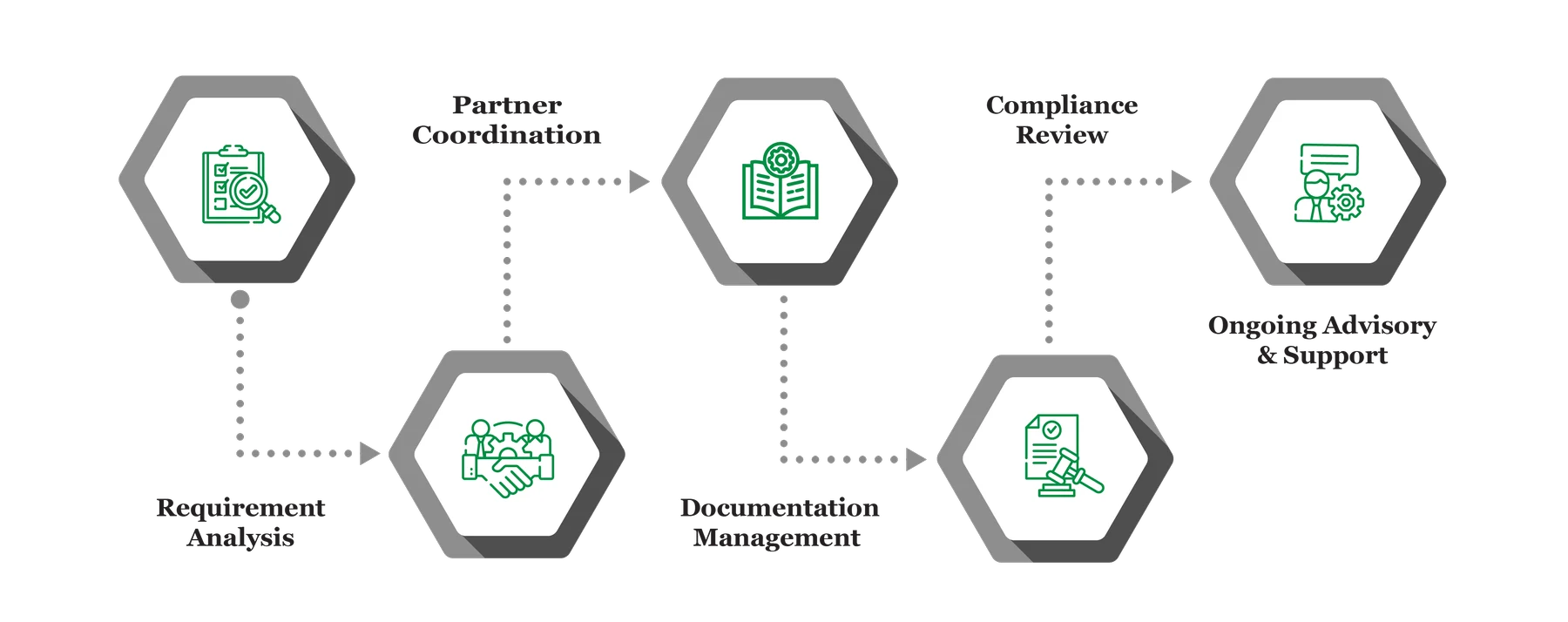
Requirement Analysis – Financial processes, reporting gaps, and objectives are reviewed to define scope. Coordination ensures alignment with KSA regulations, enabling businesses to indirectly achieve compliance, efficiency, and investor-ready documentation without disruption.
Partner Coordination – Licensed experts are engaged to execute transaction recording, payroll, and reporting tasks. MHK Services indirectly facilitates regulator-ready outputs, ensuring businesses receive structured, accurate, and compliant financial leadership aligned with Saudi Arabia’s governance standards.
Documentation Management – Ledgers, payroll records, and reports are organized for clarity and traceability. MHK Services indirectly coordinates documentation, ensuring businesses maintain board-ready financial records that strengthen transparency, compliance, and investor confidence across Saudi Arabia.
Compliance Review – Reports and filings are validated against ZATCA and SOCPA requirements. MHK Services indirectly facilitates compliance reviews, ensuring businesses avoid penalties, sustain governance, and maintain regulator-ready documentation for long-term financial stability in Saudi Arabia.
Ongoing Advisory & Support – Continuous monitoring, updates, and strategic guidance are coordinated through licensed experts, ensuring sustained compliance, accurate reporting, and investor-ready outcomes across Saudi Arabia.

What Challenges Do Companies Face in Bookkeeping Services
Companies often lack in-house expertise to manage daily bookkeeping and compliance. Without Professional Bookkeeping Services in KSA, businesses risk inefficiency, penalties, and weak investor communication.
Limited Financial Oversight – Businesses struggle to maintain accurate ledgers and reconciliations. MHK Services indirectly facilitates structured bookkeeping processes, ensuring companies achieve compliance, efficiency, and regulator-ready documentation across Saudi Arabia.
Cash Flow Gaps – Poor receivable and payable management increases operational risk. MHK Services indirectly coordinates monitoring systems and optimization strategies, ensuring businesses sustain timely cash flow, financial stability, and regulator-ready reporting across Saudi Arabia.
Regulatory Risks – Incomplete or inaccurate filings may trigger penalties. MHK Services indirectly facilitates compliance validation, ensuring businesses maintain regulator-ready documentation, avoid fines, and strengthen adherence to ZATCA and SOCPA standards in Saudi Arabia.
Stakeholder Communication Issues – Unclear reporting reduces investor trust and credibility. MHK Services indirectly coordinates structured reports, dashboards, and presentations, ensuring businesses achieve transparent communication, regulator-ready outputs, and strengthened stakeholder confidence across Saudi Arabia.
Book an Appointment with Us
Schedule a consultation with MHK Services today and discover how our expert Actuarial Valuation and financial consulting services can enhance the accuracy and reliability of your financial records.
Related Posts
Documents Required for Bookkeeping Services in Saudi Arabia
Effective bookkeeping requires organized documentation. MHK Services helps businesses across KSA maintain regulator-ready records.
- Transaction ledgers and journals
- Payroll records and employee files
- VAT filings and compliance reports
- Cash flow statements and reconciliations
- Contracts, leases, and financial agreements
Contact Us
Which Laws and Authorities Govern Bookkeeping Services in Saudi Arabia
Bookkeeping services operate under strict regulatory oversight. MHK Services ensures compliance with:
- ZATCA – VAT compliance and reporting
- SOCPA – Accounting standards and bookkeeping regulations
- Ministry of Commerce – Corporate governance and filings
Cost & Pricing Overview for Bookkeeping Services
Costs vary depending on company size, complexity, and integration needs. MHK Services guides businesses in Saudi Arabia to plan budgets efficiently.
- Company Size – Larger corporations require comprehensive services; SMEs have simpler scopes.
- Operational Complexity – Multiple divisions increase planning effort.
- Integration Needs – ERP and reporting systems affect cost and timelines.
Technology & Tools Used in Bookkeeping Services
Trusted technology ensures accurate, efficient, and regulator-ready bookkeeping. These tools streamline reporting, compliance, and financial oversight.
Industries We Serve with Bookkeeping Services in Saudi Arabia
Solutions coordinated through MHK Services benefit companies across diverse sectors. These offerings are scalable and aligned with industry-specific compliance and reporting needs.
- Retail & E-Commerce – Transaction management and reporting optimization.
- Healthcare & Pharmaceuticals – Payroll and compliance oversight.
- Real Estate & Construction – Project accounting and cash flow management.
- Finance & Banking – Investor transparency and compliance reporting.
- SMEs & Family-Owned Businesses – Scalable bookkeeping solutions aligned with growth needs.
How to Choose the Right Bookkeeping Company in Saudi Arabia
Selecting the right bookkeeping company in Saudi Arabia is one of the most important financial decisions a business owner can make. The ideal partner should have proven experience with KSA regulatory frameworks, familiarity with ZATCA and SOCPA requirements, and the technical capability to integrate with your existing ERP systems.
Beyond credentials, businesses should evaluate the firm’s responsiveness, reporting clarity, and ability to scale services as operations grow. A reliable bookkeeping company does not just record transactions but actively supports your compliance posture and financial decision making throughout the year.
Why Small Business Bookkeeping in Saudi Arabia Requires a Dedicated Approach
Small business bookkeeping in Saudi Arabia presents unique challenges that differ significantly from enterprise level financial management. Small businesses often operate with limited accounting staff, irregular cash flows, and lean administrative resources, making accurate record keeping difficult to maintain consistently.
A dedicated bookkeeping approach tailored for smaller operations ensures that every transaction is properly recorded, VAT obligations are met on time, and financial statements reflect the true health of the business. Structured bookkeeping from the early stages of a business also creates a strong foundation for future growth, investor onboarding, and loan applications.
The Growing Importance of Saudi Arabia Bookkeeping in the Vision 2030 Era
Saudi Arabia bookkeeping standards are evolving rapidly as the Kingdom advances its Vision 2030 economic transformation. Businesses operating across retail, construction, healthcare, and technology sectors are now subject to increasingly rigorous financial reporting expectations from regulatory authorities.
Companies that maintain well organized, audit ready books are better positioned to access government contracts, attract foreign investment, and participate in Saudi Arabia’s expanding private sector. Keeping bookkeeping practices aligned with national economic priorities is no longer optional but a fundamental requirement for sustainable business success in KSA.
Outsourcing Bookkeeping Services in Saudi Arabia vs Hiring In House Staff
Many business owners in Saudi Arabia face the decision of whether to outsource bookkeeping services in Saudi Arabia or build an internal accounting team. Outsourcing provides immediate access to licensed professionals, eliminates recruitment and training costs, and ensures continuous compliance coverage even during staff turnover or peak operational periods.
In contrast, hiring in house staff involves significant overhead including salaries, benefits, and ongoing training to keep up with regulatory changes. For most small and mid sized businesses, outsourcing bookkeeping to a specialized firm delivers greater accuracy, regulatory alignment, and cost efficiency compared to managing it internally.
Why Choose MHK Services for Bookkeeping Services
Expert Bookkeeping Services in Saudi Arabia deliver regulator-ready strategies, industry-specific solutions, and continuous advisory support. Businesses benefit from licensed expertise, modern tools, and compliance knowledge.
- Alignment with KSA regulations and governance standards
- Regulator-ready reporting and strategies
- Integrated ERP and analytics tools
- Customised solutions for company size and industry
- Continuous advisory and monitoring
Note: The above-mentioned services are provided via network firms if not provided directly
Contact MHK Services for Bookkeeping Services in Saudi Arabia
Top Bookkeeping Services in Saudi Arabia ensure strategic, regulator-aligned financial leadership. Licensed experts coordinate accurate reporting and support informed decision-making, with consultation available for customized bookkeeping roadmaps and compliance checklists.
FAQ's
Your bookkeeping company should provide VAT filing confirmations, reconciliation reports, and audit ready documentation aligned with ZATCA deadlines. If your provider cannot produce these records on demand, it is a clear sign your compliance posture needs immediate review.
Small businesses in KSA are required to maintain accurate transaction records, VAT filings, and financial statements in line with ZATCA and SOCPA standards. Even micro businesses handling limited transactions must keep organized books to avoid penalties during regulatory audits.
Yes, professional bookkeeping services in Saudi Arabia are equipped to manage multi currency recording, conversion entries, and reconciliation for businesses engaged in international trade. This ensures your financial statements accurately reflect foreign exchange impacts and remain fully compliant.
The onboarding period typically ranges from one to three weeks depending on the volume of historical records, ERP system complexity, and documentation availability. A structured handover process ensures no data is lost and compliance continuity is maintained from day one.
Family owned businesses often have informal financial structures that require reorganization before formal bookkeeping can begin. A professional bookkeeping company will assess existing records, separate personal and business transactions, and establish a compliant reporting framework suited to the business structure.