
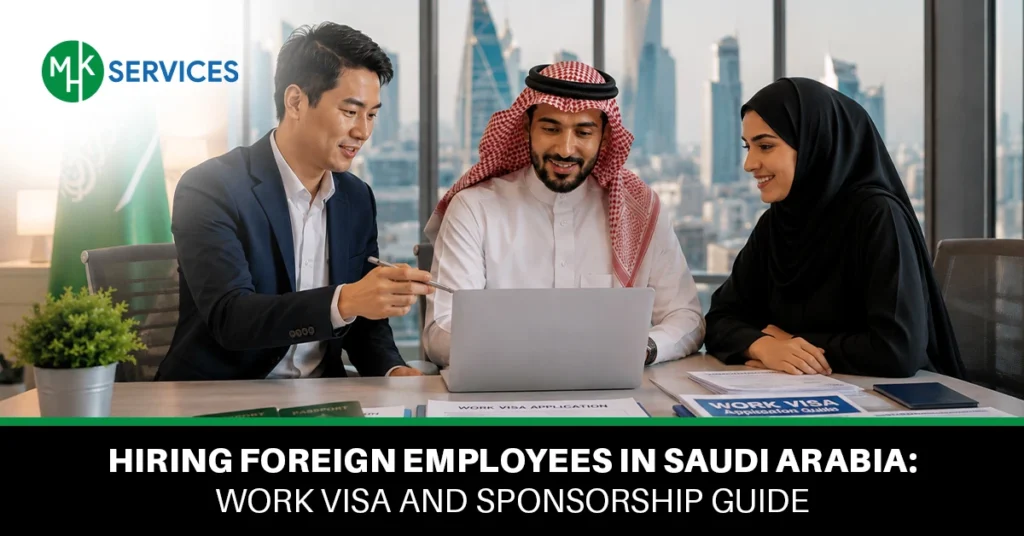
Bringing international talent into your Saudi-based company starts with one essential requirement: a valid Work Visa Saudi Arabia authorities recognize and approve. Between visa categories, sponsorship rules, and Ministry of Human Resources procedures, the process can feel overwhelming for employers hiring their first foreign employee. That’s where MHK Services comes in; we guide companies through every stage of hiring, from visa applications to final work permit issuance.
Hiring across borders isn’t just a paperwork exercise. It’s a legal relationship between the employer and the state, one that carries real obligations long after the employee’s first day. Understanding that relationship upfront makes the entire hiring journey far less stressful.
Many employers approach this for the first time expecting it to resemble hiring locally, only with an extra form or two. In reality, the framework is different enough that treating it as an afterthought tends to backfire, usually in the form of a delayed start date, or worse, a rejected application that has to be resubmitted from scratch.
Why Companies Need a Work Visa Saudi Arabia Employers Can Rely On
Saudi Arabia’s labor laws require every foreign hire to have both a valid entry visa and an approved work authorization before starting employment. Skipping proper channels or hiring without a compliant Work Visa Saudi Arabia authorities have cleared can lead to fines, deportation of the employee, or a ban on future sponsorship.
This isn’t a small administrative risk. Ministry inspections have become more frequent and more data-driven in recent years, cross-referencing GOSI records, iqama status, and payroll filings. A single unregistered hire can trigger scrutiny across your entire workforce, not just the one employee in question.
The Sponsorship System, Explained Simply
Saudi Arabia operates under a sponsorship-based employment framework, commonly known as Kafala. Under this system, Employee Sponsorship Saudi Arabia rules tie each foreign worker’s legal residency directly to their employer. The employer, acting as sponsor, is responsible for the visa application, iqama (residence permit) issuance, and ongoing legal compliance throughout the employment period.
In practical terms, this means the company isn’t just hiring an employee it’s taking on a legal guardianship role over that person’s ability to live and work in the country. That responsibility includes timely renewals, proper exit/re-entry documentation for travel, and ensuring the employee’s role matches what was declared during sponsorship.
It’s worth being upfront with new hires about how this system works, too. Employees moving to Saudi Arabia for the first time are often unfamiliar with how tightly their legal status is linked to their employer, and clear communication early on tends to prevent misunderstandings later, particularly around job changes, travel plans, or contract renewals.
Types of Work Visas You Should Know
Not every foreign hire follows the same visa path. The most common categories include:
- Work Visa Saudi Arabia issuance for skilled professionals sponsored directly by a company from abroad
- Visit-to-work conversion visas for candidates who are already inside the Kingdom on a different visa type
- Intra-company transfer visas for multinational staff being relocated between branches of the same organization
Choosing the correct category from the outset matters more than most employers expect; applying under the wrong type is one of the most common reasons visa requests get delayed or rejected outright.
For example, converting a visit visa into a full work authorization involves different paperwork and a different review path than sponsoring someone entirely from abroad. Employers who assume the two processes are interchangeable often lose weeks correcting an application that was filed under the wrong category from the start.
How the Saudi Work Permit Process Comes Together
Once a Saudi Work Permit is approved, the employee can legally begin working under the sponsoring company. Getting there generally involves employers doing the following:
- Securing a valid block visa quota from the Ministry of Human Resources
- Submitting the job offer and employment contract for approval
- Completing medical and background checks for the incoming employee
- Registering the employee under GOSI promptly after their arrival
This entire cycle, from initial application to final permit issuance, usually takes several weeks depending on the employee’s nationality, the role’s classification, and how complete the submitted paperwork is on the first attempt.
Visa Categories and Estimated Processing Times
| Visa Type | Typical Processing Time |
| Standard Work Visa Saudi Arabia | 3–6 weeks |
| Visit-to-Work Conversion | 4–8 weeks |
| Intra-Company Transfer | 2–5 weeks |
These timelines are estimates rather than guarantees; peak hiring seasons, incomplete documentation, or nationality-specific requirements can extend any of them noticeably.
What Happens After the Employee Arrives
Getting the Work Visa Saudi Arabia approved is only the beginning of the employer’s responsibilities, not the end of them. Once the employee is working, companies must renew iqamas annually, keep GOSI contributions current, and ensure their Saudization (Nitaqat) quotas remain within the required range across their overall workforce. Non-compliance at this stage can jeopardize a company’s ability to sponsor future hires, sometimes with little warning.
Employers should also track medical insurance renewals and exit re-entry visas for any travel the employee plans to take, since both are easy to overlook once the initial excitement of onboarding has passed.
Companies with larger foreign workforces often assign this tracking to a dedicated HR or government-relations function, precisely because the compliance calendar grows more complex with every additional hire. What’s manageable with two or three sponsored employees can become genuinely difficult to track manually once that number reaches double digits.
Where Employers Commonly Go Wrong
A few recurring issues show up again and again across companies hiring for the first time:
- Underestimating processing timelines during peak application seasons
- Incomplete documentation causing otherwise straightforward applications to be rejected
- Confusion between visit visas and formal sponsorship pathways
- Overlooking renewal deadlines for existing permit holders until it’s almost too late
Most of these problems are entirely avoidable with a bit of upfront planning and a clear internal checklist assigned to someone accountable for tracking dates.
Planning Ahead for Smoother Hiring
Companies that hire foreign employees regularly tend to build a simple internal calendar tracking every visa, iqama, and permit renewal date across their workforce. It sounds basic, but it’s one of the most effective ways to avoid last-minute scrambles, since a single missed renewal can quietly put an entire department’s compliance at risk without anyone noticing until an inspection happens.
It’s also worth budgeting more time than you think you’ll need, especially for a company’s very first few hires. Once the internal process is established, templates are ready, documentation checklists in place, and a clear point of contact at the Ministry-facing side of things, subsequent hires tend to move noticeably faster.
Conclusion
Hiring foreign talent in Saudi Arabia is entirely achievable once you understand how visa categories, sponsorship obligations, and permit renewals fit together. Whether you’re applying for your first Work Visa Saudi Arabia or managing sponsorship for an entire team, having the right guidance makes the process far smoother and far less risky. MHK Services works alongside employers throughout this journey, helping you hire compliantly and confidently from day one.
Frequently Asked Questions
How long does it take to get a Work Visa Saudi Arabia approval?
Processing times vary based on the visa category and applicant details. Processing usually takes 3 to 8 weeks, depending on the visa type and the employee’s nationality.
Who is responsible for Employee Sponsorship Saudi Arabia arrangements?
Every foreign employee must have a legally recognized sponsor. The hiring company acts as the legal sponsor throughout the employee’s entire residency period.
Can a Saudi Work Permit be renewed?
Work permits require regular renewal to maintain legal employment status. Yes, it must be renewed annually alongside the employee’s iqama and medical insurance.
What happens if a company hires without proper sponsorship?
Employers must comply with Saudi labor and immigration regulations. It can result in fines, visa bans, or deportation of the employee involved.
Do all foreign employees need the same type of work visa?
The required visa depends on the employee’s specific circumstances.No, the required visa type depends on the employee’s role, nationality, and current location.