
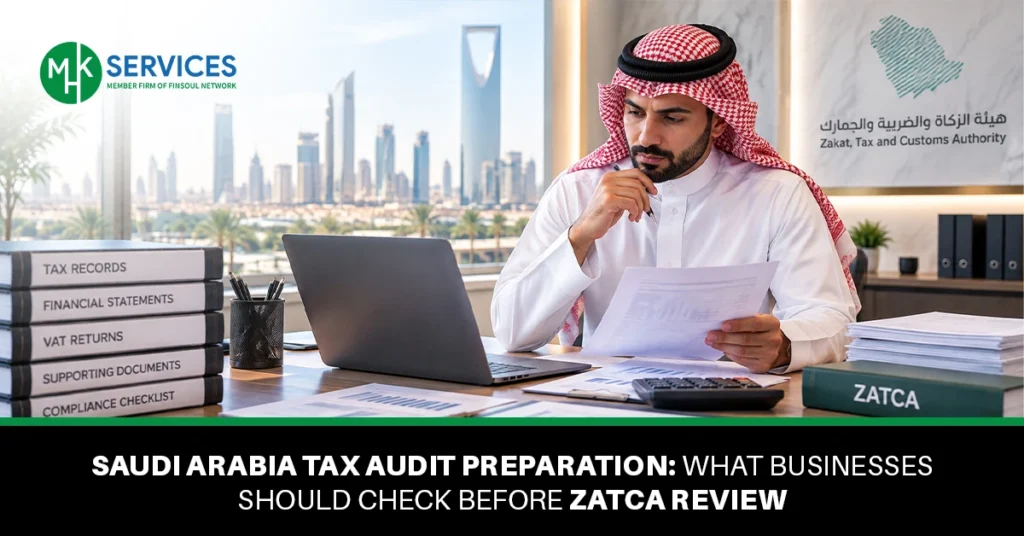
Every year, more companies operating in the Kingdom are called in for review, and tax audit preparation Saudi Arabia has quietly become one of the most searched compliance topics among finance teams. A ZATCA notice can arrive with little warning, and businesses that have not organized their records in advance often scramble to respond. This is exactly where MHK Services steps in, helping companies of all sizes get their books, filings, and supporting documents ready long before an official review knocks on the door.
This guide walks through what a proper audit-readiness process looks like, why it matters, and the specific checks every business should complete before ZATCA arrives.
Why Tax Audit Preparation in Saudi Arabia Cannot Wait
Good tax audit preparation Saudi Arabia is not something you do the week an audit letter shows up. It is an ongoing discipline built into monthly closing, invoicing, and reporting routines. Businesses that treat it as a once-a-year fire drill usually end up with mismatched VAT returns, missing invoices, or unreconciled ledgers, all of which turn a routine review into a stressful, drawn-out process.
Regulators in Saudi Arabia have also become far more data-driven. E-invoicing integration, real-time reporting, and cross-checks against supplier filings mean discrepancies are easier to spot than ever. A business that hasn’t reviewed its own numbers before ZATCA does is essentially hoping nothing was missed.
This is why finance leaders across the Kingdom are shifting tax audit preparation Saudi Arabia from a reactive task into a standing item on the monthly close calendar. Instead of pulling records together under pressure, teams that plan ahead can spend that time actually resolving discrepancies rather than just discovering them.
Who Should Be Involved Before the Review Begins
Audit readiness is rarely a one-person job. Finance handles the reconciliations, but procurement needs to confirm that purchase orders and supplier invoices match what was recorded, payroll needs to verify withholding tax calculations, and leadership needs visibility into any open issues well before ZATCA’s notice arrives. Assigning clear ownership across these functions early on prevents the last-minute scramble that makes audits feel far more stressful than they need to be.
Understanding What a ZATCA Tax Audit Actually Covers
A ZATCA tax audit typically examines VAT returns, withholding tax filings, Zakat and income tax declarations, and the underlying accounting records that support each submission. Auditors compare declared figures against invoices, bank statements, customs records, and e-invoicing data to confirm everything lines up.
Understanding this scope helps businesses know exactly where to focus their internal review rather than trying to check everything at once with no clear priority. It also clarifies which teams (finance, payroll, procurement) need to be involved before the review formally begins.
Saudi Tax Audit Requirements Every Business Should Review First
Before any review begins, it’s worth mapping your documentation against the actual Saudi tax audit requirements set out by the regulator. At minimum, this includes:
- Complete and correctly formatted e-invoices for the audit period
- VAT return filings matched against general ledger entries
- Zakat/income tax computations with supporting schedules
- Payroll and withholding tax records
- Contracts and agreements referenced in reported transactions
Skipping this mapping exercise is one of the most common reasons businesses struggle during an actual review, not because the numbers are wrong, but because the supporting paperwork isn’t organized in a way auditors expect.
Pre-Audit Checklist at a Glance
Use the table below as a quick reference before diving into a full review. It covers the six areas most reviews focus on first, and gives a starting point for teams that need to prioritize where to look.
| Area to Review | What to Check |
| VAT Returns | Match filed returns to ledger and invoices |
| E-Invoicing | Confirm compliance with ZATCA e-invoicing phases |
| Zakat & Tax Filings | Verify computations and supporting schedules |
| Payroll & WHT | Reconcile withholding tax deductions and remittances |
| Contracts | Ensure agreements match reported revenue/expenses |
| Bank Reconciliations | Confirm no unexplained gaps or timing differences |
Reviewing Tax Compliance Saudi Arabia Before the Review Window Opens
Strong tax compliance Saudi Arabia practices go beyond simply filing on time. They involve regular internal reconciliations, documented policies for how transactions are recorded, and a clear audit trail for every adjustment made during the year. Businesses can also use Taxation Advisory Services in Saudi Arabia to review their tax position, identify potential compliance concerns, and prepare for questions that may arise during a ZATCA review.
A useful exercise is a mock internal review, run a few months before the anticipated audit window, that mirrors how ZATCA itself would examine the books.
Step-by-Step Tax Audit Preparation Saudi Arabia Checklist
Once the groundwork above is in place, a structured tax audit preparation Saudi Arabia checklist typically looks like this:
- Reconcile all VAT filings against the general ledger for the full period under review
- Cross-check e-invoices against ZATCA’s platform for rejected or missing entries
- Confirm Zakat and income tax computations against audited financial statements
- Verify payroll and withholding tax remittances match declared amounts
- Organize supporting contracts, purchase orders, and shipping documents
- Assign a single point of contact to manage auditor communication
Following this sequence in order rather than jumping between tasks keeps the process organized and reduces the chance of missing a document during the actual review. Businesses that run through this checklist even once a quarter tend to find that tax audit preparation Saudi Arabia stops feeling like a scramble and becomes just another routine finance task, no different from closing the books each month.
Common Mistakes Businesses Make During a Regulatory Review
Even well-run companies fall into avoidable traps during a ZATCA tax audit. The most frequent issues include incomplete e-invoice archives, inconsistent classification of exempt versus zero-rated supplies, late responses to auditor information requests, and a lack of clear ownership over who manages the audit internally. Each of these is preventable with earlier planning and a designated compliance owner.
Building Long-Term Compliance Instead of Last-Minute Fixes
Meeting Saudi tax audit requirements consistently rather than scrambling before each review comes down to building the right habits into daily operations: monthly reconciliations, quarterly internal reviews, and a single, well-maintained document repository. Businesses that treat compliance as a continuous process, rather than a reaction to an audit letter, consistently perform better when ZATCA does come calling.
Sustained tax compliance Saudi Arabia also protects businesses from penalties tied to late corrections, since issues are caught and resolved internally long before an external party finds them.
What Auditors Actually Look For Beyond the Numbers
Beyond matching figures, ZATCA reviewers also pay close attention to how well a business can explain its own processes. Can the finance team walk through how a VAT figure was calculated? Is there a clear paper trail for adjustments made during the year? Can payroll explain a withholding tax exception? Audit & Assurance Services in Saudi Arabia can help businesses review financial records, supporting evidence, reconciliations, and internal controls before these questions arise during a tax review.
Conclusion
Thorough tax audit preparation Saudi Arabia is ultimately about consistent, organized records, regular reconciliations, and a clear process for handling documentation year-round. Businesses that build these habits face ZATCA reviews with confidence rather than anxiety. If your team needs support building an audit-ready compliance framework, MHK Services can help design and manage the process from start to finish.
Frequently Asked Questions
How long does a ZATCA review usually take?
Timelines vary by business size and complexity, but most reviews take a few weeks to a few months once all requested documents are submitted promptly.
What documents does ZATCA typically request first?
VAT returns, e-invoices, and general ledger extracts are usually requested early, followed by contracts and payroll records if discrepancies appear during the initial review.
Can a business request more time to prepare during an audit?
In many cases, reasonable extensions can be requested, though it’s best to have documentation ready before the audit notice arrives.
What happens if errors are found during the review?
Depending on the nature of the error, businesses may face penalties, additional assessments, or a request to amend prior filings.
How often should internal tax reviews be conducted?
Quarterly internal reviews, alongside a more detailed annual check, are generally recommended so businesses stay continuously audit-ready rather than reacting under pressure.