
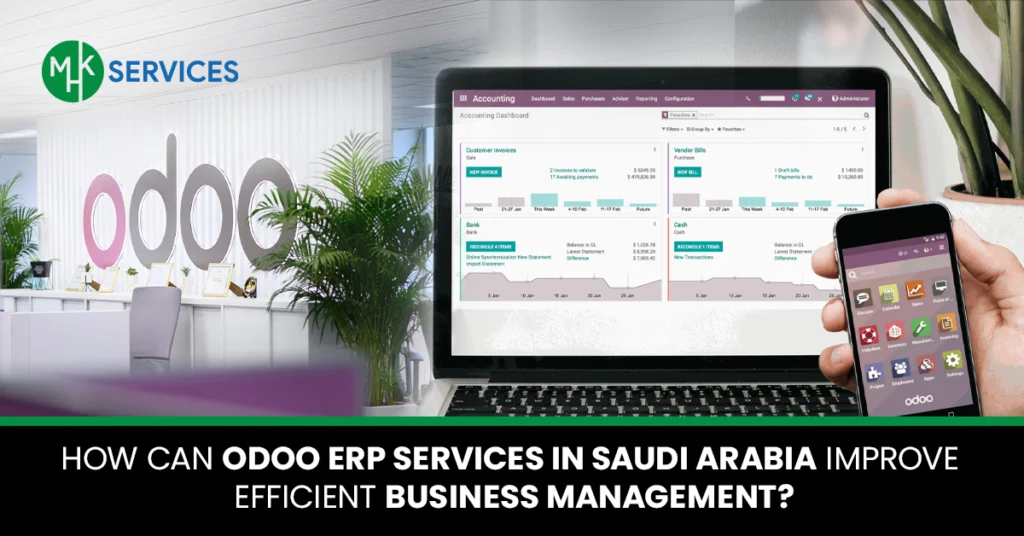
Imagine running your business and waking up every day to the same headaches, scattered data, delayed reports, and manual work slowing everything down. For many companies in Saudi Arabia, these problems are real, painful, and costly, especially when teams juggle scattered tools for finance, sales, inventory, and compliance. Odoo ERP Services in Saudi Arabia help solve this by replacing all those disconnected systems with one unified solution that keeps data clean, processes smooth, and teams working together.
MHK Services helps you move past this chaos. We bring your core operations into one platform, automate routine tasks, and build workflows that match Saudi business needs. With our expert support, your business runs faster, stays compliant, and grows confidently without the usual ERP headaches.
What Makes Odoo ERP Services in Saudi Arabia a Smart Choice for Businesses?
Choosing the right business system matters a lot in today’s fast‑moving world. Many Saudi companies struggle to manage multiple tools for finance, inventory, sales, and HR. Odoo ERP Services in Saudi Arabia offer a single platform that connects all these functions. This means teams stop working in isolated systems and start sharing real‑time data. With one system, decisions become faster and more accurate. Odoo’s modular design lets businesses start small and grow as needed, saving money compared to bulky legacy ERPs. This flexibility and powerful local compliance support make it a wise choice for Saudi businesses.
Which Common Workflow Challenges Do Saudi Companies Face Without ERP?
Saudi businesses without a unified system often struggle with slow processes, errors, and disconnected teams, which hurt productivity and decision‑making.
- Fragmented and Inconsistent Data: Data scattered across spreadsheets and separate systems prevents teams from seeing accurate information, causing confusion and repeated work.
- Time‑Intensive Manual Tasks: Manual entry and reconciliation of records take hours, leading to mistakes and diverting staff from more valuable business work.
- Poor Real‑Time Visibility: Without real‑time dashboards, managers make choices from outdated reports, slowing planning and response.
- Weak Inter‑Department Communication: Disconnected tools create silos between teams, causing delays, duplication of work, and missed opportunities.
How Can Odoo ERP Services in Saudi Arabia Improve Operational Efficiency?
The main goal of any ERP is better efficiency. With Odoo ERP Services in Saudi Arabia, automation replaces manual work. For example, when inventory is updated during a sale, the system automatically adjusts stock, updates finance data, and generates accurate reports. This happens without human input, reducing mistakes and delays. Dashboards offer real‑time insights, so managers always know their cash position and inventory status. Integrated workflows help teams work faster and coordinate better across departments. These improvements boost productivity and help businesses focus on growth rather than fixing problems.
Key Features Every Saudi Business Should Look for in an ERP System
Saudi companies evaluating an ERP system should prioritize features that support local compliance, operational efficiency, and growth.
- ZATCA E‑Invoicing and Local Compliance Support: Your ERP must automatically generate and submit e‑invoices, calculate VAT, and align with Saudi tax rules to avoid penalties from the Zakat, Tax, and Customs Authority.
- Bilingual and Arabic‑Friendly Interface: Support for both Arabic and English ensures that employees across departments can use the system comfortably and without confusion.
- Cloud‑Based Access and Scalability: Cloud deployment lets teams access real‑time data from anywhere while reducing infrastructure costs and supporting business growth.
- Real‑Time Analytics and Dashboards: Adjustable dashboards and analytics help leaders track KPIs and make quick decisions based on up‑to‑date business performance metrics.
- Seamless Integration With Other Tools: ERP should connect smoothly with tools like CRM, HR systems, and eCommerce to ensure unified workflows and eliminate data silos.
What Should Saudi Companies Consider Before Choosing an ERP Solution?
Before selecting any system, businesses should assess their current pain points and future goals. Ask simple questions like what processes are most time‑consuming, where errors occur most often, and what information leaders need quickly. Does the company need language support in Arabic? Does it require integration with local payment systems or eCommerce platforms? Understanding these needs helps choose the right ERP package. It also helps to speak with implementation partners who know the Saudi market and regulatory requirements deeply. Planning saves time and ensures the system fits business operations from day one.
How Customization Helps Align Odoo ERP With Unique Business Needs?
Each organization has unique ways of working, so a one‑size‑fits‑all system rarely works well. Customization lets businesses adapt Odoo ERP to fit their specific processes. Consultants can add custom fields, adapt reports, and create workflows that match existing procedures. For example, retailers may need special inventory rules, while service companies might focus on project billing and time tracking. Custom workflows ease adoption and ensure employees can continue working effectively. This custom alignment means the ERP supports your business instead of forcing major changes to how work is done.
How Does Odoo Support Compliance With Saudi Tax and Regulatory Requirements?
Compliance is a major requirement for businesses in Saudi Arabia. Agencies like the Zakat, Tax, and Customs Authority (ZATCA) require strict electronic invoicing standards and correct VAT reporting. Odoo systems can be configured to generate invoices that meet ZATCA e‑invoicing rules. The system handles VAT calculations, tax filing reports, and real‑time submission requirements, reducing the risk of fines and audit issues. With built‑in compliance features, companies can run audits more smoothly and avoid costly mistakes. Compliance support is a major reason many Saudi businesses select ERP solutions like Odoo.
Best Practices for Integrating Odoo ERP With Your Existing Systems
Even with a powerful ERP, many organizations already use tools like CRM platforms, payment gateways, or eCommerce systems. Integrating these with the ERP keeps data flowing smoothly and reduces duplicate work. Use secure APIs to connect tools and synchronize data. Before integration, map out current workflows so nothing is missed. Test all connections in a safe environment before going live to ensure accuracy. Training teams on how each tool works with the ERP also helps reduce confusion after deployment. Good integration practices turn the ERP into a central hub that supports the entire business.
Implementation Phases That Make Odoo Deployment Successful
A structured implementation approach breaks the project into manageable phases that reduce risk and ensure long‑term success.
- Planning and discovery: Understand business needs, set objectives, and define scope before any configuration begins.
- Configuration and setup: Install and configure Odoo modules to match workflows and control access, roles, and processes.
- Data migration and testing: Move existing data into the system cleanly, then test workflows and features to catch issues early.
- Training and go‑live support: Train users on real tasks and launch the ERP with support in place to fix problems and build confidence.
How to Measure Success After ERP Implementation?
Implementing an ERP isn’t the end goal; measuring its impact is. Look for improvements in key areas like cycle time for key processes, error rates in data entry, and speed of reporting. For example, how long did it take to close monthly books before the ERP, compared to after implementation? Monitor inventory accuracy and order processing time. Higher employee satisfaction is another indicator that the system is working better. Setting clear performance indicators before deployment helps measure success objectively. These insights guide future decisions and show the value of your investment.
Why Choose MHK Services for Odoo ERP Services in Saudi Arabia?
Choosing the right partner for ERP matters more than just choosing the software. Odoo ERP Near Me require deep knowledge of local compliance, reporting standards, and workflow needs. Our team at MHK Services brings local Saudi expertise, licensed consultants, and a compliance‑first mindset to every project. We design regulator‑aligned, audit‑ready systems that meet Saudi laws and business standards while ensuring smooth workflows and clear documentation. With adapted implementation, ongoing support, and a strong understanding of local requirements, our team helps companies improve efficiency and reduce risks with confidence.
Conclusion
In a market where speed, accuracy, and compliance matter more than ever, Odoo ERP Services in Saudi Arabia give businesses a clear path to smarter operations and stronger growth. By uniting data, automating key tasks, and meeting local requirements like ZATCA e‑invoicing and VAT, companies can focus more on strategy and less on paperwork. With MHK Services guiding your implementation, you get a system that works for your business today and scales with your future needs.