
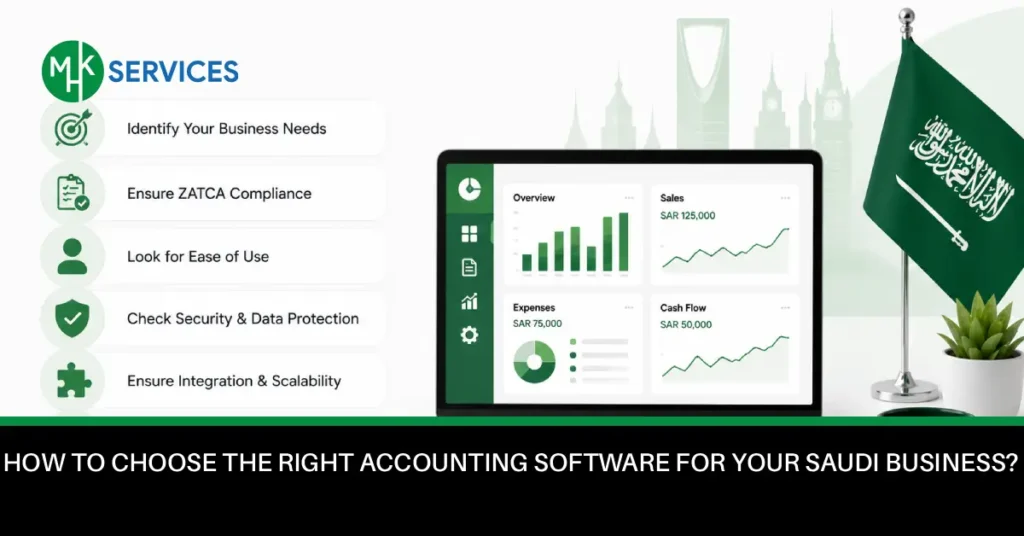
Running a business in Saudi Arabia today means operating in one of the fastest-evolving regulatory environments in the world. With Vision 2030 driving digital transformation across the Kingdom, and ZATCA’s mandatory e-invoicing requirements now in full effect, every Saudi business needs reliable, compliant, and future-ready accounting software that Saudi Arabia trusts. But with dozens of options available, from locally built platforms to global giants, how do you make the right call? This guide walks you through everything you need to know, so you can choose the best accounting software Saudi Arabia has to offer for your specific needs.
Why the Right Accounting Software in Saudi Arabia Matters Now More Than Ever
The Kingdom’s financial landscape has changed dramatically. ZATCA introduced its Phase 1 e-invoicing mandate in December 2021 and rolled out the far more demanding Phase 2 Integration Phase starting in 2023. Under Phase 2, businesses must integrate their systems directly with the FATOORA portal for real-time invoice clearance, cryptographic QR code embedding, and XML-format invoice generation. Failure to comply can result in penalties of SAR 5,000 to SAR 50,000 or more per violation.
This makes your choice of accounting software in Saudi Arabia a legal and operational priority, not just a convenience. The accounting software market in the Kingdom is currently growing at 9.1% annually and is expected to reach nearly half a billion SAR by 2029. Businesses that get this decision right today will be far better positioned for tomorrow’s economy.
At MHK Services, we have helped hundreds of Saudi businesses navigate this transition, and we consistently see the same pattern: companies that choose well-matched accounting software solutions from the start avoid costly re-implementations, compliance gaps, and productivity loss down the road.
Step 1: Understand Your Business Size and Complexity
The first and most important factor when selecting accounting software in Saudi Arabia is understanding the size and nature of your business.
Small businesses and freelancers typically need simple bookkeeping software that handles invoicing, expense tracking, VAT reporting, and basic financial statements. Tools like Qoyod, Wafeq, or Zoho Books are excellent in this space because they are affordable, Arabic-friendly, and ZATCA-compliant out of the box.
Medium-sized businesses usually require a more capable financial management system that can handle multiple cost centers, payroll, inventory, purchase orders, and detailed reporting. At this level, platforms like HAL ERP, SMACC, or QuickBooks with ZATCA integrations start to make more sense.
Large enterprises and multi-branch operations often need a full ERP implementation Saudi Arabia to unify finance, HR, procurement, and operations into a single platform. Solutions like SAP, Oracle NetSuite, Microsoft Dynamics 365, or Odoo deliver the depth, scalability, and compliance architecture required at this level.
MHK Services advises clients to always start with a realistic assessment of where your business is today and where it will be in three to five years. Buying for current needs alone often leads to expensive migrations later.
Step 2: ZATCA Compliance Is Non-Negotiable
Any accounting software Saudi Arabian businesses consider must be fully ZATCA Phase 2 compliant. This is not optional. The system must be capable of:
Generating invoices in UBL 2.1 XML format with mandatory cryptographic QR codes, integrating directly with the FATOORA portal for real-time clearance and reporting, maintaining a complete digital audit trail for every transaction, and handling ZATCA-required data fields for both standard tax invoices and simplified tax invoices.
Beware of international software that offers compliance as an add-on or through a third-party workaround. Xero and QuickBooks, for example, are popular globally but are not natively ZATCA-compliant for Saudi Arabia and require additional plugins or customization to meet local requirements. A purpose-built digital accounting solution eliminates this risk from day one.
When evaluating any accounting software Saudi Arabia vendors pitch to you, ask directly: “Is your ZATCA Phase 2 integration certified and maintained as regulations evolve?” The answer tells you everything.
Step 3: Evaluate Arabic Language and Local Support
Saudi businesses operate primarily in Arabic, and your accounting software Saudi Arabia should reflect that. Look for platforms that offer a full Arabic RTL (right-to-left) interface, Arabic invoice templates, and Arabic reporting. A system that forces your team to work in English creates adoption barriers, increases errors, and slows productivity.
Equally important is local customer support. Unlike global SaaS vendors that offer only chatbots or email ticketing, locally supported platforms provide phone, WhatsApp, and on-site support in Arabic during Saudi business hours. This matters enormously when a compliance issue arises or your team needs hands-on training.
MHK Services always recommends that clients prioritize vendors with a verified physical presence and support team in the Kingdom, especially for mid-market and enterprise deployments.
Step 4: Consider ERP vs. Standalone Bookkeeping Software
For many Saudi businesses, a key decision point is whether to use standalone bookkeeping software or invest in a full ERP implementation in Saudi Arabia.
Bookkeeping software is a good fit if your primary need is financial management, invoicing, and tax compliance. It is faster to deploy, lower in cost, and easier to manage for small teams.
ERP implementation in Saudi Arabia becomes the right choice when your business needs to connect finance with inventory, HR, sales, procurement, and operations on one unified platform. ERP systems eliminate information silos, provide real-time dashboards, and support management decision-making at scale. ERP implementation costs in Saudi Arabia range from SAR 80,000 for SMEs to SAR 8 million-plus for large enterprises, so the investment requires careful planning.
Under Saudi Vision 2030, ERP implementation in Saudi Arabia is increasingly seen as a strategic necessity rather than a luxury. The government’s push for transparency, digital integration, and economic diversification means that companies running disconnected tools are falling behind.
Step 5: Look for a Complete Financial Management System
Modern accounting software Saudi Arabia should go far beyond basic bookkeeping. Your financial management system should include VAT and Zakat calculation and reporting, multi-currency support for international transactions, bank reconciliation tools with support for Saudi banks like Al Rajhi, SNB, and Riyad Bank, payroll management compliant with WPS requirements, accounts receivable and payable management, real-time financial dashboards and customizable reports, and scalable user access for different team roles.
The best digital accounting solutions integrate all these capabilities under one roof, reducing the need for multiple tools and minimizing the risk of data inconsistency across your business.
Step 6: Cloud vs. On-Premise Deployment
Most modern accounting software Saudi Arabia platforms are now cloud-based, and for good reason. Cloud deployment offers real-time access from any device, automatic software updates that keep you compliant with regulatory changes, lower upfront costs through subscription pricing, and data hosted on secure servers, often within the Kingdom on AWS or Azure GCC infrastructure to satisfy data residency requirements.
On-premise deployment still suits some large enterprises or regulated sectors that require full infrastructure control. Hybrid models are also available for organizations in transition.
MHK Services helps clients evaluate both models in the context of their IT capacity, regulatory obligations, and long-term cost of ownership.
Top Accounting Software Saudi Arabia Options at a Glance
Here is a quick overview of the most trusted accounting software that Saudi Arabian businesses rely on today:
- Mezan is a Saudi-developed cloud platform built specifically for SMEs. It offers full ZATCA Phase 2 compliance with no third-party tools, unlimited e-invoicing, and an Arabic-first interface. Pricing starts from 69 SAR per month.
- Qoyod is a local cloud platform popular with small businesses for its simplicity, Arabic interface, ZATCA compliance, and WhatsApp support.
- HAL ERP is a comprehensive Saudi ERP solution covering accounting, inventory, HR, and payroll with full VATCA and ZATCA compliance built in.
- SMACC is a Saudi-based cloud accounting and ERP solution with over 35 years of regional experience and support for 13 languages.
- QuickBooks is globally popular and supports Arabic invoices and multi-currency but requires third-party integration for full ZATCA Phase 2 compliance.
- Zoho Books is a flexible cloud platform with VAT compliance, strong automation, and integration with the broader Zoho business suite.
- SAP, Oracle NetSuite, and Microsoft Dynamics 365 are enterprise-grade solutions ideal for large organizations needing a full-scale ERP implementation Saudi Arabia with deep customization and compliance architecture.
- When in doubt, consult MHK Services for a needs assessment tailored to your industry and company size.
Step 7: Calculate Total Cost of Ownership
Price matters, but the real question is total cost of ownership over three to five years. Consider the monthly or annual subscription fee, setup and onboarding costs, staff training expenses, customization and integration fees, ongoing support costs, and the cost of compliance failures if the software falls short.
Cheap accounting software Saudi Arabia may appear affordable upfront but cost far more in missed compliance deadlines, manual workarounds, and eventual migration to a better system. MHK Services always walks clients through a complete TCO analysis before recommending any financial management system.
Step 8: Insist on a Free Trial or Demo
No matter how strong a vendor’s pitch, always test the software before committing. Run sample transactions, test VAT invoice generation, check how ZATCA submission works, and have your actual finance team use the system for a few days. Their feedback on usability and workflow fit is invaluable.
The best accounting software Saudi Arabia vendors are confident enough in their product to offer free trials ranging from 14 to 30 days. If a vendor resists this, that is a red flag.
Conclusion
Choosing the right accounting software Saudi Arabia requires more than picking the most popular name or the cheapest plan. It demands a clear understanding of your business size, compliance obligations under ZATCA, language and support requirements, and long-term scalability needs. Whether you are a growing SME looking for reliable bookkeeping software or a large enterprise planning a full ERP implementation Saudi Arabia, the decision has far-reaching consequences for your operations, compliance, and growth.
Saudi Arabia’s digital economy is accelerating under Vision 2030, and your financial management system must keep pace. The right digital accounting solution does not just record transactions. It becomes the financial backbone of your business, keeping you audit-ready, penalty-free, and empowered to make faster, smarter decisions.
MHK Services is here to make that journey easier. From initial needs assessment to software selection, ERP implementation Saudi Arabia, and ongoing support, our team brings deep local expertise and a commitment to getting your accounting infrastructure right the first time. Contact MHK Services today to book a free consultation and find the accounting software Saudi Arabia solution your business deserves.
Frequently Asked Questions
1. What is the best accounting software for small businesses in Saudi Arabia?
For small businesses in Saudi Arabia, the best options are locally built platforms like Mezan, Qoyod, and Wafeq. These offer full ZATCA Phase 2 compliance, Arabic-language interfaces, and affordable pricing starting from around 69 SAR per month. They are purpose-built for the Saudi market and require no third-party tools to meet e-invoicing requirements.
2. Is accounting software mandatory in Saudi Arabia?
While accounting software itself is not legally mandated by name, VAT-registered businesses in Saudi Arabia are required by ZATCA to generate, store, and submit invoices electronically in approved formats. This effectively makes using compliant accounting software or an ERP system a legal necessity for any registered business.
3. What is ZATCA Phase 2 and does my accounting software need to comply?
ZATCA Phase 2, known as the Integration Phase, requires Saudi businesses to integrate their e-invoicing systems directly with ZATCA’s FATOORA portal. This means invoices must be submitted in real-time in UBL 2.1 XML format with embedded QR codes. Any accounting software you use must support this integration, or you face penalties of SAR 5,000 to SAR 50,000 or more per violation.
4. What is the difference between accounting software and an ERP system?
Accounting software focuses primarily on financial tasks such as invoicing, bookkeeping, VAT reporting, and financial statements. An ERP system is a broader platform that integrates accounting with other business functions including inventory, HR, sales, payroll, and procurement into one unified system. Large businesses with complex operations typically need ERP, while smaller businesses can often manage with standalone accounting tools.
5. How much does accounting software cost in Saudi Arabia?
Costs vary widely depending on the type of solution. Cloud-based accounting platforms for SMEs typically range from SAR 69 to SAR 800 per month. Mid-market ERP solutions can cost SAR 80,000 to SAR 500,000 for implementation. Enterprise-level ERP implementations from vendors like SAP or Oracle can reach SAR 8 million or more, depending on scope, customization, and number of users. MHK Services can help you identify the right option within your budget.