
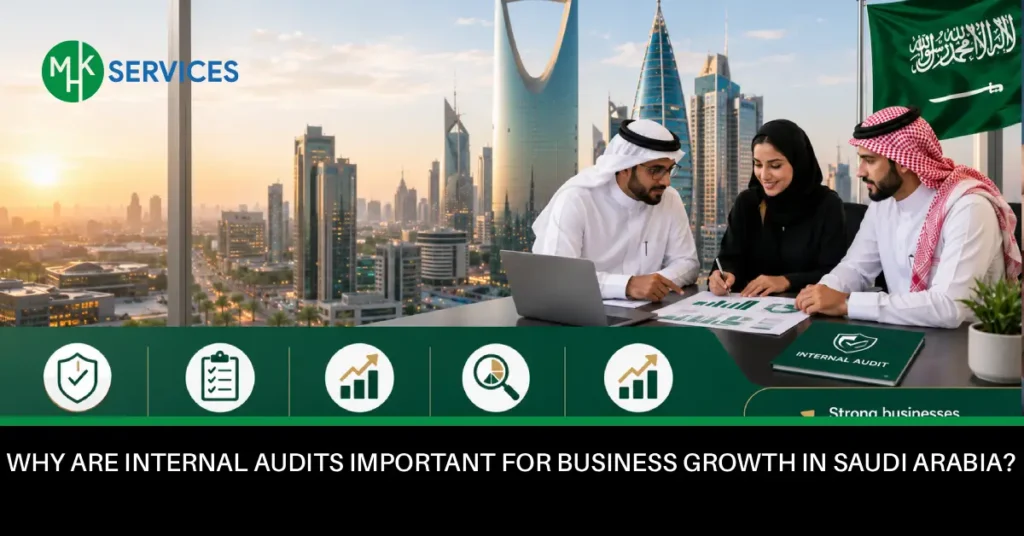
In today’s rapidly evolving business landscape, Internal Audit Saudi Arabia has emerged as a critical strategic imperative that extends far beyond traditional compliance requirements. As Saudi Arabia continues its transformative journey under Vision 2030, organizations face unprecedented opportunities and complexities that demand sophisticated oversight mechanisms serving to strengthen organizational resilience and enable sustainable competitive advantage.
The significance of implementing robust audit frameworks cannot be overstated. Modern businesses recognize that professional audit services extend far beyond traditional financial verification. Today, a comprehensive internal audit encompasses strategic advisory services, risk assessment capabilities, and proactive governance enhancement. This evolution positions such functions as a critical driver of competitive advantage in the Kingdom’s dynamic marketplace.
Understanding Internal Audits in the Saudi Context
Internal audit represents an independent and objective activity that provides assurance and consulting services aimed at adding tangible value to organizational operations. Unlike external audits, which focus on regulatory compliance and financial statement verification, audit services KSA emphasize operational improvement and strategic decision-making support that drives organizational value.
In Saudi Arabia’s unique regulatory environment, internal audit professionals follow the International Professional Practices Framework issued by the Institute of Internal Auditors (IIA), while simultaneously complying with local regulations mandated by authorities such as the Capital Market Authority (CMA) for listed entities and the Ministry of Commerce for registered companies. This dual compliance requirement necessitates professional guidance from firms with deep local expertise.
Leading consultancy firms stand at the forefront of delivering comprehensive internal audit solutions that bridge international best practices with local regulatory requirements. Through strategic partnerships with organizations across diverse sectors, these firms help businesses establish frameworks that simultaneously enhance governance, reduce operational risk, and accelerate sustainable growth throughout the Kingdom.
The Strategic Business Case for Internal Audits
Strategic Value Beyond Compliance
The traditional perception of these services as purely compliance-driven has fundamentally shifted. Today, forward-thinking organizations recognize that a comprehensive internal audit delivers multidimensional strategic value. Risk evaluation conducted through audit functions provides management with actionable insights that inform capital allocation, resource optimization, and growth initiatives that drive competitive advantage.
Industry experts emphasize that audit services KSA enables organizations to optimize resource allocation by identifying inefficiencies, enhance decision-making through data-driven insights, accelerate digital transformation while ensuring controls address emerging cyber risks, and build stakeholder confidence through transparent governance practices and continuous monitoring.
Supporting Vision 2030 Objectives
Saudi Arabia’s Vision 2030 fundamentally transforms the Kingdom into a diversified global investment powerhouse. This ambitious agenda requires organizations to operate with unprecedented levels of efficiency, transparency, and accountability. Comprehensive internal audit programs directly support Vision 2030 objectives by strengthening institutional frameworks capable of attracting foreign direct investment and enabling sustainable economic diversification.
Professional firms recognize that Vision 2030-aligned businesses require comprehensive audit services that assess not only financial controls but also operational efficiency, technology integration, and stakeholder value creation. This holistic approach positions internal audit functions as strategic enablers of the Kingdom’s transformation goals and long-term prosperity.
Risk Assessment: The Foundation of Business Resilience
Identifying Emerging Threats Before They Materialize
Modern audit services conducted through comprehensive internal audit processes identify threats across financial, operational, cybersecurity, regulatory, and strategic domains. Rather than reacting to crises, organizations leverage professional audit services to implement proactive mitigation strategies that protect shareholder value and maintain competitive positioning.
Risk analysis within audit frameworks enables businesses to detect financial exposure and identify weaknesses in revenue recognition controls, evaluate operational vulnerabilities, including process dependencies and supply chain risks, address cybersecurity threats through evaluation of IT controls and data protection measures, and monitor regulatory changes through continuous environmental scanning.
Professional audit consultants deploy sophisticated methodologies that transform raw data into strategic intelligence. By combining quantitative analysis with qualitative expertise, leading firms help organizations in KSA prioritize investments and governance improvements that deliver maximum impact on organizational performance and sustainable growth.
Creating Risk-Aware Organizational Culture
Internal audit functions increasingly emphasize culture transformation. Rather than imposing controls top-down, modern audit services foster organizational cultures where risk awareness permeates decision-making at all levels. This cultural shift proves particularly valuable in family-owned enterprises and newly diversified conglomerates navigating complex organizational structures and multiple stakeholder interests.
Business Governance: The Architecture of Accountability
Establishing Clear Accountability Structures
Effective business governance requires crystalline clarity regarding authority, responsibility, and accountability. Internal Audit Saudi Arabia frameworks evaluate whether governance structures enable informed decision-making while preventing unauthorized actions and conflicts of interest. Risk assessment and governance assessments typically examine board and committee effectiveness, authority matrices clarifying decision-making power, conflict resolution mechanisms, and performance accountability linking compensation to strategic achievement.
Professional consultants bring extensive experience in establishing business governance structures aligned with Saudi Arabia’s corporate governance regulations. Through comprehensive engagements, leading firms help build governance architectures that strengthen stakeholder confidence while enabling agile decision-making and organizational responsiveness to market changes and emerging opportunities.
Supporting Board Effectiveness and Oversight
Saudi Arabia’s Capital Market Authority Corporate Governance Regulations mandate that publicly listed companies implement robust governance frameworks. Internal audit functions report directly to audit committees, providing independent assurance regarding the effectiveness of management’s risk management efforts and control systems implemented throughout the organization.
Standards with CMA requirements demand that internal audit teams maintain independence, possess relevant expertise, and deliver high-quality assurance services. Industry leaders ensure client organizations meet these demanding standards while leveraging audit committee relationships to enhance strategic advisory impact and stakeholder communication.
Audit Compliance: Meeting Regulatory Expectations
The Evolving Regulatory Landscape
Saudi Arabia’s regulatory environment has undergone substantial evolution, with authorities implementing increasingly sophisticated oversight mechanisms. Regulatory requirements now encompass provisions under the Capital Market Authority Corporate Governance Regulations, Saudi Organization for Chartered and Professional Accountants Standards, Zakat and Customs Authority Regulations, and Ministry of Commerce requirements affecting all business operations.
Internal audit functions must navigate this complex landscape while delivering value to stakeholders. Non-compliance with regulatory expectations carries severe consequences, including regulatory penalties, reputational damage, and market access restrictions that threaten organizational viability and investor confidence substantially.
Proactive Compliance Management
Rather than adopting reactive compliance postures, sophisticated organizations leverage audit services to anticipate regulatory changes and align operations preemptively. Industry leaders maintain deep regulatory expertise enabling clients to implement frameworks that satisfy current requirements while demonstrating preparedness for emerging standards and international expectations.
Internal audit departments working with experienced consultants benefit from regulatory intelligence through continuous monitoring of CMA and ZATCA guidance, gap assessment evaluating current capabilities against emerging requirements, implementation support for structured compliance transitions, and evidence management demonstrating compliance effectiveness to regulators.
Sector-Specific Applications and Benefits
Financial Services Leadership
Banks and financial institutions in Saudi Arabia face heightened regulatory scrutiny around credit risk, liquidity management, anti-money laundering compliance, and cybersecurity. Internal audit functions in financial services provide essential assurance that controls over critical risk domains operate effectively and continuously evolve to address emerging threats and regulatory changes.
Oil and Gas Industry Excellence
The Kingdom’s strategic petroleum sector requires specialized internal audit expertise addressing exploration risks, operational safety, environmental compliance, and international regulatory requirements affecting long-term viability. Leading consultants bring deep industry expertise, enabling audit functions to address sector-specific risks effectively and support operational excellence.
Retail and E-Commerce Transformation
Rapidly growing retail and e-commerce organizations require comprehensive audit services addressing inventory management, cybersecurity, VAT compliance, and customer data protection. Risk management capabilities help retailers identify supply chain vulnerabilities before escalation into operational crises affecting business continuity. MHK Services offers specialized expertise in this high-growth sector.
Building Effective Internal Audit Functions
Organizational Structure and Independence
Effective internal audit functions require appropriate organizational positioning supporting independence and objectivity. Best practices dictate that internal audit departments report functionally to audit committees, providing independence from management while reporting administratively to executive leadership for resource adequacy.
Professional consultants help organizations establish governance structures supporting internal audit effectiveness. Through comprehensive consulting engagements, leading firms ensure audit committees receive high-quality assurance regarding risk management system effectiveness and control environment strength throughout organizational operations.
Talent Development and Professional Excellence
Service quality depends fundamentally on personnel capabilities and professional qualifications. Effective internal audit organizations invest continuously in professional development, encouraging certifications such as Certified Internal Auditor (CIA) and Certified Information Systems Auditor (CISA) to enhance service delivery.
Leading firms recognize that Saudi Arabia faces a shortage of qualified audit professionals. Through training partnerships, industry leaders help organizations build sustainable internal audit capabilities while developing the Kingdom’s professional talent pool to support long-term service quality.
The ROI and Measurable Business Impact
Quantifying Audit Value and Returns
Organizations often struggle to articulate the return on investment from professional audit services. However, evidence demonstrates substantial benefits, including fraud prevention, operational efficiency improvements averaging 5-15%, regulatory penalty avoidance, improved capital allocation, and enhanced stakeholder confidence throughout organizational networks.
MHK Services clients consistently report measurable returns from Internal Audit Saudi Arabia engagements, with benefits typically exceeding investment costs within 12-18 months of implementation. These tangible returns demonstrate that internal audit is far more than a compliance requirement for business sustainability.
Strategic Advisory Value Beyond Assurance
Beyond traditional assurance, audit services KSA increasingly provide strategic advisory services addressing emerging risks, operational transformation, digital enablement, and organizational restructuring initiatives. This advisory dimension dramatically amplifies the value these functions deliver to growth-focused organizations seeking competitive differentiation. MHK Services specializes in this strategic advisory delivery model.
Leveraging MHK Services for Internal Audit Excellence
MHK Services brings comprehensive expertise enabling organizations across Saudi Arabia to establish and enhance internal audit functions effectively. Our specialists combine deep regulatory expertise, industry specialization, international best practices, and technology integration capabilities to deliver measurable value.
Through comprehensive Internal Audit Saudi Arabia engagements, MHK Services helps organizations design risk-based audit plans aligned with organizational risk profiles, establish governance frameworks supporting effective oversight, implement audit technologies enabling continuous monitoring, develop internal talent through training and knowledge transfer, and enhance board communications demonstrating audit compliance effectiveness.
Conclusion:
The strategic importance of comprehensive audit functions has evolved far beyond compliance checkbox activities. In today’s complex business environment, professional audit services represent essential capabilities enabling organizations to navigate regulatory complexity, identify emerging risks, enhance business governance, and accelerate sustainable growth.
Organizations that recognize Risk appraisal and audit compliance as strategic investments position themselves for competitive advantage in Saudi Arabia’s dynamic marketplace. By partnering with experienced providers like MHK Services, organizations establish internal audit functions that deliver measurable value while building stakeholder confidence and supporting Vision 2030 objectives.
The evidence is clear: comprehensive audit programs drive business growth. Organizations that invest strategically in internal audit capabilities and risk assessment consistently outperform peers in profitability, stakeholder satisfaction, and long-term sustainability throughout the Kingdom.
Ready to transform your organization’s audit function into a strategic growth enabler? Partner with MHK Services today to establish or enhance your internal audit capabilities and unlock sustainable competitive advantage.
Frequently Asked Questions
1. What is the purpose of Internal Audit Saudi Arabia?
Internal Audit Saudi Arabia helps businesses evaluate internal controls, manage risks, improve operational efficiency, and ensure compliance with Saudi regulations and governance standards. It extends far beyond traditional financial verification to provide strategic advisory services that support organizational objectives and long-term value creation.
2. How does Internal Audit Saudi Arabia support business growth?
Internal Audit Saudi Arabia identifies inefficiencies, reduces operational risks, strengthens decision-making through data-driven insights, and improves business performance, creating a stronger foundation for sustainable growth and competitive advantage in the Kingdom’s marketplace.
3. Is Internal Audit Saudi Arabia mandatory for companies in Saudi Arabia?
Requirements depend on company type and sector. Listed companies and regulated industries must establish formal internal audit functions to meet governance and compliance obligations mandated by the Capital Market Authority and Ministry of Commerce regulations.
4. What are the main benefits of audit compliance?
Audit compliance improves risk management, enhances internal controls, supports regulatory adherence, prevents fraud, increases stakeholder confidence, and provides strategic advisory services that drive organizational value creation and operational excellence.
5. How often should a company conduct an internal audit in Saudi Arabia?
Most businesses perform internal audit activities annually based on risk-based plans developed in consultation with audit committees. High-risk sectors may require more frequent reviews to address emerging vulnerabilities and operational changes in the dynamic business environment.