
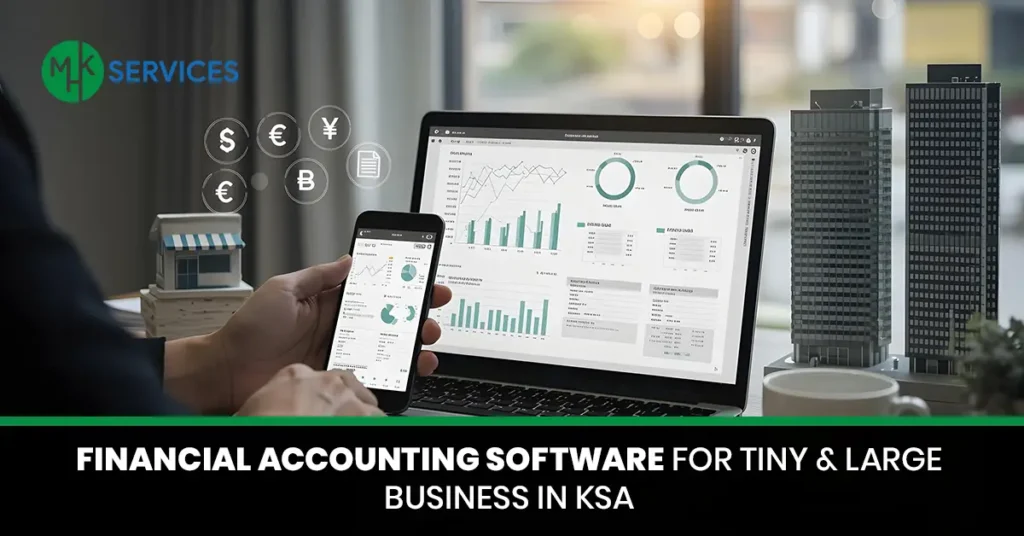
In today’s increasingly complex business world, financial accounting software plays a pivotal role in ensuring transparency, efficiency, and growth. For businesses in the Kingdom of Saudi Arabia (KSA), financial accounting is not just a routine activity—it is an essential component of day-to-day operations and long-term strategy. Whether you are running a tiny startup or managing the intricate financial systems of a large corporation, the right financial accounting software can make a world of difference. As technology advances, businesses of all sizes are leveraging accounting software to simplify tasks, ensure compliance, and optimize decision-making.
The Growing Importance of Financial Accounting in KSA
With the emergence of Saudi Arabia’s Vision 2030, a national initiative focused on economic diversification and development, businesses are under increasing pressure to adopt best practices and innovative tools. Financial accounting has become a cornerstone for companies looking to align with the country’s evolving economic landscape. From meeting regulatory requirements to improving operational efficiency, the need for robust financial accounting has grown exponentially.
Tiny businesses often grapple with limited resources and bandwidth, making it critical to streamline processes through automation. By contrast, large enterprises require sophisticated tools that can handle massive volumes of data, offer advanced reporting features, and integrate seamlessly with other business systems. Regardless of the size of the business, accurate financial accounting is essential to success.
How Financial Accounting Software Transforms Businesses
Modern financial accounting software is a game-changer, offering a multitude of benefits that address the unique challenges faced by tiny and large businesses alike. Here are some of the key advantages:
- Enhanced Accuracy and Error Reduction Manual bookkeeping is prone to human errors, which can lead to financial discrepancies and even legal penalties. Financial accounting software eliminates these risks by automating calculations and maintaining consistent accuracy in financial records. This is especially important for businesses in KSA, where adherence to regulatory standards is non-negotiable.
- Time Savings Through Automation For small business owners and startups, time is often their most valuable asset. Financial accounting software automates routine tasks such as invoicing, tax calculations, and payroll processing, freeing up time for entrepreneurs to focus on core business activities. Similarly, large corporations can manage complex financial operations without overburdening their workforce.
- Regulatory Compliance Made Easy Compliance with financial regulations is a critical requirement for businesses operating in KSA. This includes adherence to Value Added Tax (VAT) laws and other financial disclosure requirements. Financial accounting software simplifies compliance by incorporating local regulations into its framework, ensuring that businesses remain up-to-date and avoid potential fines.
- Cost-Effective Solutions for Every Business Size For tiny businesses, the cost of hiring dedicated accounting personnel can be prohibitive. Financial accounting software provides an affordable alternative by automating essential accounting functions. Large corporations can also reduce overhead costs by streamlining their financial management systems.
- Scalability to Support Growth Businesses in KSA are scaling rapidly as the nation undergoes economic transformation. Financial accounting software is designed to grow with your business, offering the flexibility to handle increasing transaction volumes and expanding operations.
- Real-Time Insights and Analytics In today’s fast-paced business environment, timely decision-making is crucial. Financial accounting software provides real-time insights through dashboards and analytics, enabling businesses to monitor their financial health and make informed decisions on the fly.
- Data Security and Confidentiality Financial records are among the most sensitive data a business possesses. Modern accounting software includes robust security features such as encryption, multi-factor authentication, and regular backups to ensure that financial data remains protected from breaches and unauthorized access.
Features to Look For in Financial Accounting Software
Choosing the right financial accounting software is a critical decision that can significantly impact your business operations. Here are some essential features to consider when selecting software in KSA:
- Customization Options The needs of a tiny business are vastly different from those of a large corporation. Look for software that can be tailored to your specific requirements. For instance, startups may prioritize simplicity and cost-effectiveness, while large enterprises may require comprehensive features and advanced analytics.
- Cloud-Based Access Cloud-based accounting software offers unmatched flexibility, allowing businesses to access their financial data from anywhere with an internet connection. This feature is especially beneficial for businesses with remote teams or multiple locations.
- Seamless Integration Integration with other business tools such as Customer Relationship Management (CRM) systems and Enterprise Resource Planning (ERP) software enhances overall efficiency. This is particularly important for large businesses that rely on interconnected systems.
- User-Friendly Interface A simple and intuitive interface ensures that employees can quickly adapt to the software without extensive training. This is especially beneficial for small businesses with limited technical expertise.
- Automation and Artificial Intelligence Automation features such as automatic invoice generation, tax calculations, and expense tracking save time and reduce the risk of errors. Some advanced software also includes artificial intelligence capabilities to provide predictive insights and trend analysis.
- Local Regulatory Compliance Ensure that the software is designed to meet local regulatory requirements in KSA, including VAT compliance and financial reporting standards.
- Robust Reporting and Analysis Advanced reporting features allow businesses to generate detailed financial statements, budgets, and performance analyses. These tools are invaluable for large enterprises aiming to optimize their financial strategy.
Popular Financial Accounting Software in KSA
The Saudi market offers a variety of financial accounting software options designed to cater to diverse business needs. Here are some popular choices:
- Zoho Books A cost-effective solution ideal for startups and small businesses. It offers features such as invoice automation, expense tracking, and VAT compliance.
- QuickBooks Known for its user-friendly interface, QuickBooks is suitable for both tiny businesses and large enterprises. It provides comprehensive accounting tools and seamless integration capabilities.
- SAP A highly scalable Software solution designed for large corporations, SAP offers advanced analytics, integration with ERP systems, and extensive reporting features.
- Xero A cloud-based accounting platform that emphasizes collaboration and real-time financial management. It is a popular choice among businesses looking for flexibility and accessibility.
Conclusion
In conclusion, financial accounting software has become an indispensable tool for businesses in KSA, regardless of size. For tiny startups, these tools provide a cost-effective means of managing finances, ensuring regulatory compliance, and focusing on growth. For large enterprises, accounting software offers the scalability, security, and advanced analytics required to navigate the complexities of modern business.The Kingdom of Saudi Arabia’s Vision 2030 has accelerated the adoption of innovative technologies, and software is a vital component of this transformation. By choosing the right software tailored to their needs, businesses can unlock new opportunities, streamline operations, and position themselves for success in a competitive market. The future belongs to businesses that embrace technology, and it is the foundation for sustainable growth.